
Introduction
Revenue Cycle Management (RCM) is the backbone of every successful healthcare practice. From patient registration to final payment collection, every step in the revenue cycle directly impacts your cash flow, operational efficiency, and long-term growth.
Yet many healthcare providers struggle with delayed reimbursements, claim denials, and administrative inefficiencies—issues that can silently drain revenue over time.
Understanding and optimizing your revenue cycle is no longer optional. It is essential for survival in today’s competitive healthcare environment.
What Is Revenue Cycle Management?
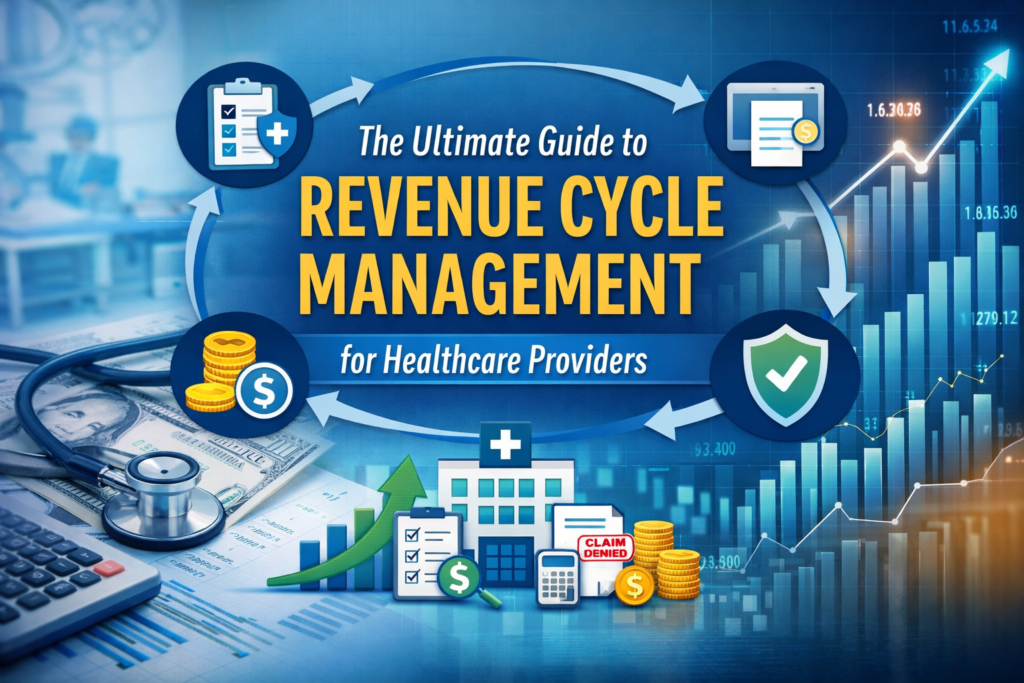
Revenue Cycle Management (RCM) refers to the complete financial process of managing patient service revenue—from appointment scheduling to final payment collection.
It includes:
- Patient registration and insurance verification
- Medical coding and charge capture
- Claim submission and processing
- Payment posting
- Denial management and appeals
- Patient billing and collections
A well-managed revenue cycle ensures that healthcare providers get paid accurately and on time for the services they deliver.
Why Revenue Cycle Management Is Critical in 2026
Healthcare systems are becoming more complex, and insurance requirements are stricter than ever. Even small inefficiencies in your revenue cycle can lead to:
- Increased claim denials
- Delayed reimbursements
- Revenue leakage
- Administrative overload
Practices that fail to optimize their RCM processes often face cash flow issues and limited growth opportunities.
On the other hand, efficient RCM systems help providers maintain financial stability while focusing on patient care.
Key Stages of the Revenue Cycle
1. Patient Registration and Insurance Verification
Accurate patient information and insurance eligibility checks are the foundation of a clean revenue cycle.
Errors at this stage lead to claim rejections and delays later in the process.
2. Medical Coding and Charge Capture
Proper coding ensures that services are accurately documented and billed.
Incorrect coding can result in underpayments, overpayments, or claim denials.
3. Claim Submission
Submitting clean and accurate claims increases the chances of first-pass approval.
Incomplete or incorrect claims lead to delays and additional administrative work.
4. Payment Posting
Payments from insurance companies and patients must be accurately recorded.
This helps track revenue and identify discrepancies.
5. Denial Management
Denied claims must be analyzed, corrected, and resubmitted quickly.
Ignoring denials leads to permanent revenue loss.
6. Patient Billing and Collections
Clear communication with patients regarding their financial responsibility improves collection rates and reduces confusion.
Common Challenges in Revenue Cycle Management
Many healthcare providers face recurring issues such as:
- High claim denial rates
- Inefficient billing processes
- Lack of transparency in financial workflows
- Delayed reimbursements
- Staffing shortages for administrative tasks
These challenges often arise from outdated systems or lack of specialized expertise.
Benefits of Optimized Revenue Cycle Management
1. Improved Cash Flow
Efficient RCM ensures faster reimbursements and steady revenue streams.
2. Reduced Claim Denials
Accurate documentation and verification reduce the chances of rejected claims.
3. Increased Operational Efficiency
Streamlined workflows reduce administrative burden and improve productivity.
4. Better Financial Visibility
Real-time insights into revenue help providers make informed business decisions.
5. Enhanced Patient Experience
Clear billing processes improve patient satisfaction and trust.
Why Outsourcing Revenue Cycle Management Makes Sense
Managing RCM in-house can be complex and resource-intensive.
Outsourcing to experienced professionals allows healthcare providers to reduce operational costs, improve billing accuracy, speed up claim processing, and focus more on patient care. A dedicated RCM partner brings expertise, technology, and consistency that many practices struggle to maintain internally.
How Excel Medical Consultants Supports Healthcare Providers
Excel Medical Consultants offers comprehensive Revenue Cycle Management and Medical Billing Services designed to improve cash flow, reduce claim denials, resolve backlogs efficiently, and enhance overall billing performance.
By combining industry expertise with structured processes, Excel Medical Consultants helps healthcare practices streamline operations and achieve sustainable growth.
Conclusion
Revenue Cycle Management plays a critical role in the financial health and long-term success of any healthcare practice. Every stage of the revenue cycle, from patient registration to final payment collection, directly influences how efficiently a practice operates and how consistently it generates revenue.
When RCM processes are not properly managed, healthcare providers face ongoing challenges such as delayed payments, increased claim denials, and unnecessary administrative burden. Over time, these issues can limit growth and reduce overall profitability.
On the other hand, a well-optimized revenue cycle allows practices to improve cash flow, minimize errors, and operate more efficiently. By focusing on structured processes, accurate billing, and proactive management, healthcare providers can create a stable financial foundation while continuing to deliver high-quality patient care.